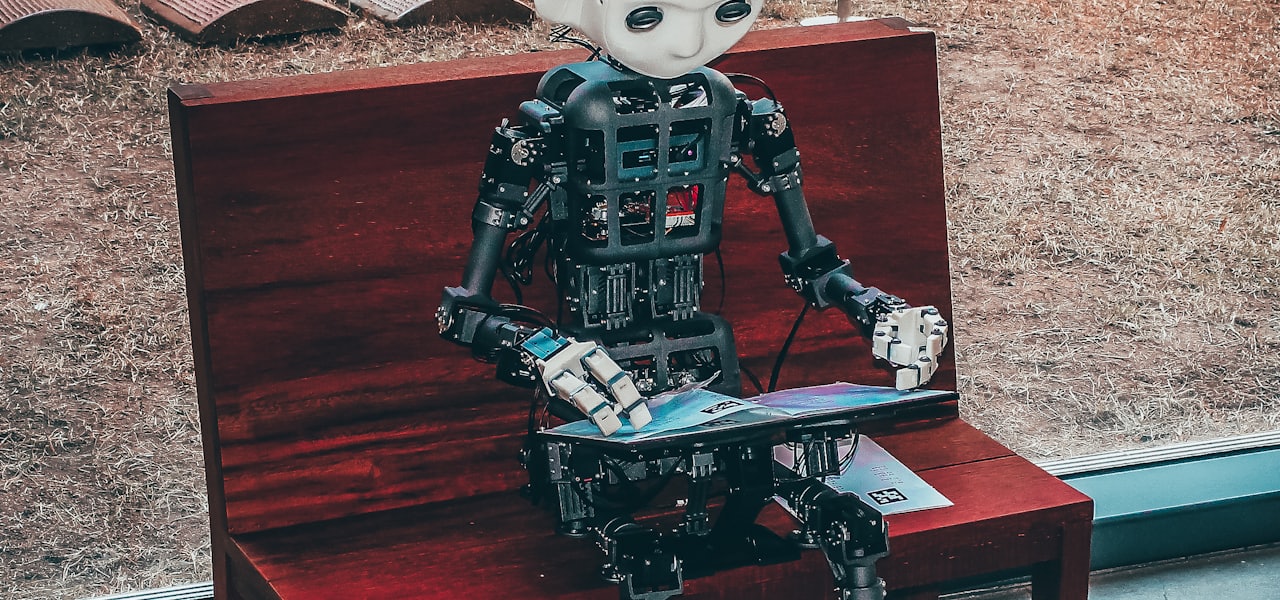
Trevor Paglen (born 1974) is an American artist, geographer, and author whose work covers mass surveillance and data collection. In 2016, Paglen won the Deutsche Börse Photography Foundation Prize and he has also won The Cultural Award from the German Society for Photography. In 2017, he was a recipient of a MacArthur Fellowship. On March 17, 2026, Paglen was awarded the 2026 LG Guggenheim Award (a collaboration between LG and Guggenheim New York). == Early life and education == Paglen earned a B.A. degree in religious studies in 1998 from the University of California at Berkeley, a M.F.A. degree in 2002 from the School of the Art Institute of Chicago, and a Ph.D. in Geography in 2008 from the University of California at Berkeley. While at UC Berkeley, Paglen lived in the Berkeley Student Cooperative, residing in Chateau, Fenwick, and Rochdale co-ops. == Work == Sean O'Hagan, writing in The Guardian in 2015, said that Paglen, whose "ongoing grand project [is] the murky world of global state surveillance and the ethics of drone warfare", "is one of the most conceptually adventurous political artists working today, and has collaborated with scientists and human rights activists on his always ambitious multimedia projects." His visual work such as his "Limit Telephotography" and "The Other Night Sky" series have received widespread attention for both his technical innovations and for his conceptual project that involves simultaneously making and negating documentary-style truth-claims. Paglen’s work relies on contemporary technology in two meaningful ways. Firstly, the views he photographs would be impossible to shoot without media tech, that includes the cameras, the microscopes, and even helicopters. But interestingly enough, the shots would not be possible if not for the existence of the subject. The contrasts between secrecy and revelation, evidence and abstraction distinguish Paglen's work. With that the artist presents not so much "evidence" as admonitions to awareness. He was an Eyebeam Commissioned Artist in 2007. In 2008 the Berkeley Art Museum devoted a comprehensive solo exhibition to his work. In the next year, Paglen took part in the Istanbul Biennial, and in 2010 he exhibited at the Vienna Secession. Autonomy Cube was a project by Paglen and Jacob Appelbaum that placed relays for the anonymous communication network Tor in traditional art museums. He contributed to the Oscar-winning documentary film Citizenfour (2014), directed by Laura Poitras. Paglen features in the nerd-culture documentary Traceroute (2016). Orbital Reflector was a reflective, mylar sculpture by Paglen intended to be the first "purely artistic" object in space. The temporary satellite, containing an inflatable mylar balloon with reflective surface, launched into space 3 December 2018. A mid-career survey in 2018–2019, Trevor Paglen: Sites Unseen, was a traveling exhibition shown at the Smithsonian American Art Museum in Washington DC and the Museum of Contemporary Art San Diego. In September 2020, Pace Gallery in London held an exhibition of Paglen's work, exploring "the weird, partial ways computers look back at us". His work is included in the permanent collections of the San Francisco Museum of Modern Art, the Columbus Museum of Art, and the Metropolitan Museum. === Experimental Geography === Paglen is credited with coining the term "Experimental Geography" to describe practices coupling experimental cultural production and art-making with ideas from critical human geography about the production of space, materialism, and praxis. The 2009 book Experimental Geography: Radical Approaches to Landscape, Cartography, and Urbanism is largely inspired by Paglen's work. == Publications == Paglen has published a number of books. Torture Taxi (2006) (co-authored with investigative journalist A. C. Thompson) was the first book to comprehensively describe the CIA's extraordinary rendition program. I Could Tell You But Then You Would Have to be Destroyed by Me (2007), is a look at the world of black projects through unit patches and memorabilia created for top-secret programs. Blank Spots on the Map: The Dark Geography of the Pentagon's Secret World (2009) is a broader look at secrecy in the United States. The Last Pictures (2012) is a collection of 100 images to be placed on permanent media and launched into space on EchoStar XVI, as a repository available for future civilizations (alien or human) to find. === Publications by Paglen === I Could Tell You But Then You Would Have to be Destroyed by Me. Brooklyn, NY: Melville House, 2007. ISBN 1-933633-32-8. Blank Spots on the Map: The Dark Geography of the Pentagon's Secret World. New York: Dutton, 2009. ISBN 9781101011492. Invisible: Covert Operations and Classified Landscapes, Photographs by Trevor Paglen. New York: Aperture, 2010. ISBN 9781597111300. With an essay by Rebecca Solnit. The Last Pictures. Oakland, CA: University of California, 2012. ISBN 9780520275003. Trevor Paglen. London: Phaidon, 2018. ISBN 0714873446. With essays by Laren Cornell, Julia Bryan-Wilson, Omar Kholeif. === Publications co-authored === Torture Taxi. Co-authored with A. C. Thompson. Brooklyn, NY: Melville House Publishing, 2006. ISBN 1-933633-09-3. Icon, 2007. ISBN 9781840468304. === Publications with contributions by Paglen === Experimental Geography: Radical Approaches to Landscape, Cartography, and Urbanism. Brooklyn, NY: Melville House, 2009. ISBN 978-0091636586. Edited by Nato Thompson. With essays by Paglen, Thompson, and Jeffrey Kastner. Trevor Paglen and Jacob Appelbaum – Autonomy Cube. Revolver, 2016. ISBN 978-3957633026. Essays by Luke Skrebowski and Keller Easterling on Autonomy Cube, a piece of sculpture by Paglen and Jacob Appelbaum. In English and German. == Exhibitions == Bellwether Gallery, New York, November–December 2006 The Other Night Sky, Berkeley Art Museum, 2008 A Compendium of Secrets, Cologne Still Revolution: Suspended in Time, Museum of Contemporary Canadian Art, Toronto, May–June 2009. Group exhibition with Paglen, Barbara Astman, Walead Beshty, Mat Collishaw, Stan Douglas, Idris Khan, Martha Rosler, and Mikhael Subotzky A Hidden Landscape, Aksioma, Ljubljana, Slowenia Geographies of Seeing, Lighthouse, Brighton, England, October–November 2012 The Last Pictures, New York, 2012–13 Trevor Paglen, Altman Siegel gallery, San Francisco, CA, March–May 2015 The Octopus, Frankfurter Kunstverein, Frankfurt am Main, 2015 Autonomy Cube, Edith-Russ-Haus, Oldenburg, Germany, October 2015 – January 2016. Sculpture by Paglen and Jacob Appelbaum. Deutsche Börse Photography Foundation Prize 2016, The Photographers' Gallery, London, April–July 2016. Deutsche Börse Photography Prize shortlist with Paglen, Erik Kessels, Laura El-Tantawy, and Tobias Zielony. Radical Landscapes, di Rosa, Napa, February–April 2016 L’Image volée, Americas II, Bahamas Internet Cable System (BICS-1) and Globenet, Fondazione Prada, Milan (group exhibition), 2016 A Study of Invisible Images, Metro Pictures, New York, September–October 2017 == Awards == 2014: Pioneer Award from the Electronic Frontier Foundation. 2015: The Cultural Award from the German Society for Photography (DGPh) 2015: Academy Award as cameraman and director for the documentary film Citzenfour. 2016: Deutsche Börse Photography Foundation Prize 2017: MacArthur Fellowship, John D. and Catherine T. MacArthur Foundation, Chicago, IL 2018: Nam June Paik Art Center Prize == Films about Paglen == Unseen Skies (2021) == Works ==
Template matching
Template matching is a technique in digital image processing for finding small parts of an image which match a template image. It can be used for quality control in manufacturing, navigation of mobile robots, or edge detection in images. The main challenges in a template matching task are detection of occlusion, when a sought-after object is partly hidden in an image; detection of non-rigid transformations, when an object is distorted or imaged from different angles; sensitivity to illumination and background changes; background clutter; and scale changes. == Feature-based approach == The feature-based approach to template matching relies on the extraction of image features, such as shapes, textures, and colors, that match the target image or frame. This approach is usually achieved using neural networks and deep-learning classifiers such as VGG, AlexNet, and ResNet.Convolutional neural networks (CNNs), which many modern classifiers are based on, process an image by passing it through different hidden layers, producing a vector at each layer with classification information about the image. These vectors are extracted from the network and used as the features of the image. Feature extraction using deep neural networks, like CNNs, has proven extremely effective has become the standard in state-of-the-art template matching algorithms. This feature-based approach is often more robust than the template-based approach described below. As such, it has become the state-of-the-art method for template matching, as it can match templates with non-rigid and out-of-plane transformations, as well as high background clutter and illumination changes. == Template-based approach == For templates without strong features, or for when the bulk of a template image constitutes the matching image as a whole, a template-based approach may be effective. Since template-based matching may require sampling of a large number of data points, it is often desirable to reduce the number of sampling points by reducing the resolution of search and template images by the same factor before performing the operation on the resultant downsized images. This pre-processing method creates a multi-scale, or pyramid, representation of images, providing a reduced search window of data points within a search image so that the template does not have to be compared with every viable data point. Pyramid representations are a method of dimensionality reduction, a common aim of machine learning on data sets that suffer the curse of dimensionality. == Common challenges == In instances where the template may not provide a direct match, it may be useful to implement eigenspaces to create templates that detail the matching object under a number of different conditions, such as varying perspectives, illuminations, color contrasts, or object poses. For example, if an algorithm is looking for a face, its template eigenspaces may consist of images (i.e., templates) of faces in different positions to the camera, in different lighting conditions, or with different expressions (i.e., poses). It is also possible for a matching image to be obscured or occluded by an object. In these cases, it is unreasonable to provide a multitude of templates to cover each possible occlusion. For example, the search object may be a playing card, and in some of the search images, the card is obscured by the fingers of someone holding the card, or by another card on top of it, or by some other object in front of the camera. In cases where the object is malleable or poseable, motion becomes an additional problem, and problems involving both motion and occlusion become ambiguous. In these cases, one possible solution is to divide the template image into multiple sub-images and perform matching on each subdivision. == Deformable templates in computational anatomy == Template matching is a central tool in computational anatomy (CA). In this field, a deformable template model is used to model the space of human anatomies and their orbits under the group of diffeomorphisms, functions which smoothly deform an object. Template matching arises as an approach to finding the unknown diffeomorphism that acts on a template image to match the target image. Template matching algorithms in CA have come to be called large deformation diffeomorphic metric mappings (LDDMMs). Currently, there are LDDMM template matching algorithms for matching anatomical landmark points, curves, surfaces, volumes. == Template-based matching explained using cross correlation or sum of absolute differences == A basic method of template matching sometimes called "Linear Spatial Filtering" uses an image patch (i.e., the "template image" or "filter mask") tailored to a specific feature of search images to detect. This technique can be easily performed on grey images or edge images, where the additional variable of color is either not present or not relevant. Cross correlation techniques compare the similarities of the search and template images. Their outputs should be highest at places where the image structure matches the template structure, i.e., where large search image values get multiplied by large template image values. This method is normally implemented by first picking out a part of a search image to use as a template. Let S ( x , y ) {\displaystyle S(x,y)} represent the value of a search image pixel, where ( x , y ) {\displaystyle (x,y)} represents the coordinates of the pixel in the search image. For simplicity, assume pixel values are scalar, as in a greyscale image. Similarly, let T ( x t , y t ) {\textstyle T(x_{t},y_{t})} represent the value of a template pixel, where ( x t , y t ) {\textstyle (x_{t},y_{t})} represents the coordinates of the pixel in the template image. To apply the filter, simply move the center (or origin) of the template image over each point in the search image and calculate the sum of products, similar to a dot product, between the pixel values in the search and template images over the whole area spanned by the template. More formally, if ( 0 , 0 ) {\displaystyle (0,0)} is the center (or origin) of the template image, then the cross correlation T ⋆ S {\displaystyle T\star S} at each point ( x , y ) {\displaystyle (x,y)} in the search image can be computed as: ( T ⋆ S ) ( x , y ) = ∑ ( x t , y t ) ∈ T T ( x t , y t ) ⋅ S ( x t + x , y t + y ) {\displaystyle (T\star S)(x,y)=\sum _{(x_{t},y_{t})\in T}T(x_{t},y_{t})\cdot S(x_{t}+x,y_{t}+y)} For convenience, T {\displaystyle T} denotes both the pixel values of the template image as well as its domain, the bounds of the template. Note that all possible positions of the template with respect to the search image are considered. Since cross correlation values are greatest when the values of the search and template pixels align, the best matching position ( x m , y m ) {\displaystyle (x_{m},y_{m})} corresponds to the maximum value of T ⋆ S {\displaystyle T\star S} over S {\displaystyle S} . Another way to handle translation problems on images using template matching is to compare the intensities of the pixels, using the sum of absolute differences (SAD) measure. To formulate this, let I S ( x s , y s ) {\displaystyle I_{S}(x_{s},y_{s})} and I T ( x t , y t ) {\displaystyle I_{T}(x_{t},y_{t})} denote the light intensity of pixels in the search and template images with coordinates ( x s , y s ) {\displaystyle (x_{s},y_{s})} and ( x t , y t ) {\displaystyle (x_{t},y_{t})} , respectively. Then by moving the center (or origin) of the template to a point ( x , y ) {\displaystyle (x,y)} in the search image, as before, the sum of absolute differences between the template and search pixel intensities at that point is: S A D ( x , y ) = ∑ ( x t , y t ) ∈ T | I T ( x t , y t ) − I S ( x t + x , y t + y ) | {\displaystyle SAD(x,y)=\sum _{(x_{t},y_{t})\in T}\left\vert I_{T}(x_{t},y_{t})-I_{S}(x_{t}+x,y_{t}+y)\right\vert } With this measure, the lowest SAD gives the best position for the template, rather than the greatest as with cross correlation. SAD tends to be relatively simple to implement and understand, but it also tends to be relatively slow to execute. A simple C++ implementation of SAD template matching is given below. == Implementation == In this simple implementation, it is assumed that the above described method is applied on grey images: This is why Grey is used as pixel intensity. The final position in this implementation gives the top left location for where the template image best matches the search image. One way to perform template matching on color images is to decompose the pixels into their color components and measure the quality of match between the color template and search image using the sum of the SAD computed for each color separately. == Speeding up the process == In the past, this type of spatial filtering was normally only used in dedicated hardware solutions because of the computational complexity of the operation, however we can lessen this complexity b
Time-aware long short-term memory
Time-aware LSTM (T-LSTM) is a long short-term memory (LSTM) unit capable of handling irregular time intervals in longitudinal patient records. T-LSTM was developed by researchers from Michigan State University, IBM Research, and Cornell University and was first presented in the Knowledge Discovery and Data Mining (KDD) conference. Experiments using real and synthetic data proved that T-LSTM auto-encoder outperformed widely used frameworks including LSTM and MF1-LSTM auto-encoders.
Relationship square
In statistics, the relationship square is a graphical representation for use in the factorial analysis of a table individuals x variables. This representation completes classical representations provided by principal component analysis (PCA) or multiple correspondence analysis (MCA), namely those of individuals, of quantitative variables (correlation circle) and of the categories of qualitative variables (at the centroid of the individuals who possess them). It is especially important in factor analysis of mixed data (FAMD) and in multiple factor analysis (MFA). == Definition of relationship square in the MCA frame == The first interest of the relationship square is to represent the variables themselves, not their categories, which is all the more valuable as there are many variables. For this, we calculate for each qualitative variable j {\displaystyle j} and each factor F s {\displaystyle F_{s}} ( F s {\displaystyle F_{s}} , rank s {\displaystyle s} factor, is the vector of coordinates of the individuals along the axis of rank s {\displaystyle s} ; in PCA, F s {\displaystyle F_{s}} is called principal component of rank s {\displaystyle s} ), the square of the correlation ratio between the F s {\displaystyle F_{s}} and the variable j {\displaystyle j} , usually denoted : η 2 ( j , F s ) {\displaystyle \eta ^{2}(j,F_{s})} Thus, to each factorial plane, we can associate a representation of qualitative variables themselves. Their coordinates being between 0 and 1, the variables appear in the square having as vertices the points (0,0), ( 0,1), (1,0) and (1,1). == Example in MCA == Six individuals ( i 1 , … , i 6 ) {\displaystyle i_{1},\ldots ,i_{6})} are described by three variables ( q 1 , q 2 , q 3 ) {\displaystyle (q_{1},q_{2},q_{3})} having respectively 3, 2 and 3 categories. Example : the individual i 1 {\displaystyle i_{1}} possesses the category a {\displaystyle a} of q 1 {\displaystyle q_{1}} , d {\displaystyle d} of q 2 {\displaystyle q_{2}} and f {\displaystyle f} of q 3 {\displaystyle q_{3}} . Applied to these data, the MCA function included in the R Package FactoMineR provides to the classical graph in Figure 1. The relationship square (Figure 2) makes easier the reading of the classic factorial plane. It indicates that: The first factor is related to the three variables but especially q 3 {\displaystyle q_{3}} (which have a very high coordinate along the first axis) and then q 2 {\displaystyle q_{2}} . The second factor is related only to q 1 {\displaystyle q_{1}} and q 3 {\displaystyle q_{3}} (and not to q 2 {\displaystyle q_{2}} which has a coordinate along axis 2 equal to 0) and that in a strong and equal manner. All this is visible on the classic graphic but not so clearly. The role of the relationship square is first to assist in reading a conventional graphic. This is precious when the variables are numerous and possess numerous coordinates. == Extensions == This representation may be supplemented with those of quantitative variables, the coordinates of the latter being the square of correlation coefficients (and not of correlation ratios). Thus, the second advantage of the relationship square lies in the ability to represent simultaneously quantitative and qualitative variables. The relationship square can be constructed from any factorial analysis of a table individuals x variables. In particular, it is (or should be) used systematically: in multiple correspondences analysis (MCA); in principal components analysis (PCA) when there are many supplementary variables; in factor analysis of mixed data (FAMD). An extension of this graphic to groups of variables (how to represent a group of variables by a single point ?) is used in Multiple Factor Analysis (MFA) == History == The idea of representing the qualitative variables themselves by a point (and not the categories) is due to Brigitte Escofier. The graphic as it is used now has been introduced by Brigitte Escofier and Jérôme Pagès in the framework of multiple factor analysis == Conclusion == In MCA, the relationship square provides a synthetic view of the connections between mixed variables, all the more valuable as there are many variables having many categories. This representation iscan be useful in any factorial analysis when there are numerous mixed variables, active and/or supplementary.
Tensor product network
A tensor product network, in artificial neural networks, is a network that exploits the properties of tensors to model associative concepts such as variable assignment. Orthonormal vectors are chosen to model the ideas (such as variable names and target assignments), and the tensor product of these vectors construct a network whose mathematical properties allow the user to easily extract the association from it.
Too Good To Go
Too Good To Go is a service with a mobile application that connects customers to restaurants and stores that have surplus unsold food. The service covers major European cities, and in October 2020 started operations in North America. As part of the initiatives taken on the International Day of Awareness of Food Loss and Waste to reduce food loss and waste, the app is suggested alongside OLIO among many others. In 2023 Too Good To Go was the fastest-growing sustainable food app startup by number of downloads. As of August 2023, it claimed 164,000 businesses, serving 62 million users, have saved 155 million bags of food. As of March 2023, it claimed to have saved over 200 million meals. == History == The company was created in 2015 in Denmark by Thomas Bjørn Momsen, Klaus Bagge Pedersen, Adam Sigbrand and Brian Christensen. In 2017, Mette Lykke (co-founder of Endomondo) joined as CEO. In February 2019, the company raised an additional 6 million euros in a new round of investment. In August 2019, Too Good To Go was re-launched in Austria. In September 2019, Too Good To Go acquired the Spanish startup weSAVEeat and merged it into its own brand. In November 2019, the offer of Too Good To Go extended to plants through a partnership with the French retail plants company Jardiland. In December 2019, Too Good To Go partnered with the French grocery retail stores Intermarché, and donated 60K euros to the French charity Restaurants du Cœur. In October 2021, Bonnie Wright teamed up with Too Good To Go to drive the initiative to reduce food waste. == Corporate affairs == The key trends for the Danish entity Too Good To Go ApS are (as of the financial year ending December 31): == International expansion == As of March 2026 the company serves the European countries Austria, Belgium, Czechia, Denmark, the Faroe Islands, France, Germany, Ireland, Italy, the Netherlands, Norway, Poland, Portugal, Spain, Sweden, Switzerland, the United Kingdom. Outside of Europe the service is available in Australia, Canada, Japan, New Zealand and the United States. == Purpose == The purpose of Too Good To Go is to reduce food waste worldwide. It developed a mobile application that connects restaurants and stores that have unsold, surplus food, with customers who can then buy whatever food the outlet considers surplus to requirements—without being able to choose—at a much lower price than normal. The food on the app is priced at one-third its original price. The company claims this reduces the waste of food that would otherwise be discarded; food waste is a global problem that affects the environment. In three years active, the app reached more than 9.5 million users. As of 2022, more than 57.7 million users and 154,000 establishments have signed up, and 139 million meals have been collected. In 2019, the company had 350 employees in Europe. As of June 2023 the company was estimated to have 1,289 employees. == Use == Food outlets must notify the TGTG company about what they have available on each day, stating what sort of food they have (baked foods, meals, produce, vegan food), and the price for a 'surprise bag', whose contents they determine; the user cannot choose, but the original prices will be three or more times the TGTG price. Notification is made early based upon the quantity predicted to be left over, not at the end of a selling period. Users must register to use the service. A mobile phone with an Internet connection running Android or iOS is needed. The user runs the TGTG app, which lists outlets available within a chosen distance and time range. The customer can then order and pay for a 'surprise bag'. The supplier can cancel an order at any time if the expected surplus is not available—the purchaser is notified by text message—and the purchaser can cancel with two hours' notice. The phone must be taken to the food supplier in a specified pickup time window, often 30 or 60 minutes long, and the transaction is finalised by swiping the app—connected to the Internet—to confirm collection.
Bioz
Bioz is a search engine for life science experimentation. == History == Bioz was founded by Karin Lachmi and Daniel Levitt. Lachmi is a scientist who completed her postdoc in molecular and cellular biology at the Stanford University School of Medicine. During her lab work she found little available data regarding preferable lab tools, reagents and related products for experimentation. There are 50,000 vendors selling 300 million scientific products. She decided to start the company in order to provide researchers with adequate information for that purpose. Co-founder Daniel Levitt is an entrepreneur who sold his company WebAppoint to Microsoft in the year 2000. He also co-founded the company StemRad. At Bioz, Lachmi serves as the Chief Scientific Officer and Levitt serves as the chief executive officer. Bioz claims to have over a million researcher-users from 196 countries. Among the investors are Esther Dyson and the Stanford-StartX Fund. The company's advisory board includes Nobel Laureates in Chemistry Michael Levitt, Roger Kornberg, and Ada Yonath. == Technology == The company uses artificial intelligence, machine learning and natural language processing in order to extract experimentation data from scientific articles, such as the products that researchers used, the companies that supply the products, the protocol conditions that researchers selected, and the types of experiments and techniques. The algorithm ranks products based on how frequently they were used by researchers in their experiments, how recently a product was used, and the impact factor of the journal. The algorithm's output is a Bioz stars score for each product that was mentioned in an article. Bioz is a data-driven platform for product recommendations, which is contrary to platforms such as TripAdvisor and OpenTable that are based on user-generated reviews and ratings. The recommendations and scoring system that the company has developed are meant to assist researchers with the process of developing future medications and finding cures for diseases. They are guided towards products and techniques that were previously used by other researchers when planning and performing experiments. The company's revenue is based on selling SaaS subscriptions to researchers in biopharma companies. They also charge product suppliers for content syndication.