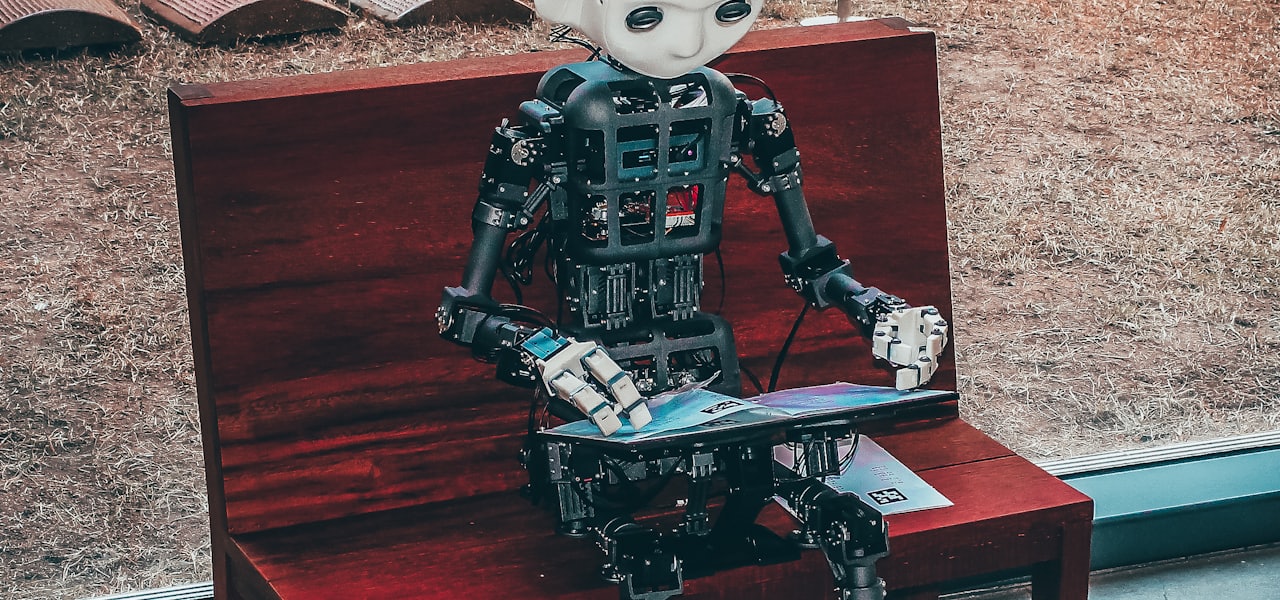
Case-based reasoning (CBR), broadly construed, is the process of solving new problems based on the solutions of similar past problems. In everyday life, an auto mechanic who fixes an engine by recalling another car that exhibited similar symptoms is using case-based reasoning. A lawyer who advocates a particular outcome in a trial based on legal precedents or a judge who creates case law is using case-based reasoning. So, too, an engineer copying working elements of nature (practicing biomimicry) is treating nature as a database of solutions to problems. Case-based reasoning is a prominent type of analogy solution making. It has been argued that case-based reasoning is not only a powerful method for computer reasoning, but also a pervasive behavior in everyday human problem solving; or, more radically, that all reasoning is based on past cases personally experienced. This view is related to prototype theory, which is most deeply explored in cognitive science. == Process == Case-based reasoning has been formalized for purposes of computer reasoning as a four-step process: Retrieve: Given a target problem, retrieve cases relevant to solving it from memory. A case consists of a problem, its solution, and, typically, annotations about how the solution was derived. For example, suppose Fred wants to prepare blueberry pancakes. Being a novice cook, the most relevant experience he can recall is one in which he successfully made plain pancakes. The procedure he followed for making the plain pancakes, together with justifications for decisions made along the way, constitutes Fred's retrieved case. Reuse: Map the solution from the previous case to the target problem. This may involve adapting the solution as needed to fit the new situation. In the pancake example, Fred must adapt his retrieved solution to include the addition of blueberries. Revise: Having mapped the previous solution to the target situation, test the new solution in the real world (or a simulation) and, if necessary, revise. Suppose Fred adapted his pancake solution by adding blueberries to the batter. After mixing, he discovers that the batter has turned blue – an undesired effect. This suggests the following revision: delay the addition of blueberries until after the batter has been ladled into the pan. Retain: After the solution has been successfully adapted to the target problem, store the resulting experience as a new case in memory. Fred, accordingly, records his new-found procedure for making blueberry pancakes, thereby enriching his set of stored experiences, and better preparing him for future pancake-making demands. == Comparison to other methods == At first glance, CBR may seem similar to the rule induction algorithms of machine learning. Like a rule-induction algorithm, CBR starts with a set of cases or training examples; it forms generalizations of these examples, albeit implicit ones, by identifying commonalities between a retrieved case and the target problem. If for instance a procedure for plain pancakes is mapped to blueberry pancakes, a decision is made to use the same basic batter and frying method, thus implicitly generalizing the set of situations under which the batter and frying method can be used. The key difference, however, between the implicit generalization in CBR and the generalization in rule induction lies in when the generalization is made. A rule-induction algorithm draws its generalizations from a set of training examples before the target problem is even known; that is, it performs eager generalization. For instance, if a rule-induction algorithm were given recipes for plain pancakes, Dutch apple pancakes, and banana pancakes as its training examples, it would have to derive, at training time, a set of general rules for making all types of pancakes. It would not be until testing time that it would be given, say, the task of cooking blueberry pancakes. The difficulty for the rule-induction algorithm is in anticipating the different directions in which it should attempt to generalize its training examples. This is in contrast to CBR, which delays (implicit) generalization of its cases until testing time – a strategy of lazy generalization. In the pancake example, CBR has already been given the target problem of cooking blueberry pancakes; thus it can generalize its cases exactly as needed to cover this situation. CBR therefore tends to be a good approach for rich, complex domains in which there are myriad ways to generalize a case. In law, there is often explicit delegation of CBR to courts, recognizing the limits of rule based reasons: limiting delay, limited knowledge of future context, limit of negotiated agreement, etc. While CBR in law and cognitively inspired CBR have long been associated, the former is more clearly an interpolation of rule based reasoning, and judgment, while the latter is more closely tied to recall and process adaptation. The difference is clear in their attitude toward error and appellate review. Another name for case-based reasoning in problem solving is symptomatic strategies. It does require à priori domain knowledge that is gleaned from past experience which established connections between symptoms and causes. This knowledge is referred to as shallow, compiled, evidential, history-based as well as case-based knowledge. This is the strategy most associated with diagnosis by experts. Diagnosis of a problem transpires as a rapid recognition process in which symptoms evoke appropriate situation categories. An expert knows the cause by virtue of having previously encountered similar cases. Case-based reasoning is the most powerful strategy, and that used most commonly. However, the strategy won't work independently with truly novel problems, or where deeper understanding of whatever is taking place is sought. An alternative approach to problem solving is the topographic strategy which falls into the category of deep reasoning. With deep reasoning, in-depth knowledge of a system is used. Topography in this context means a description or an analysis of a structured entity, showing the relations among its elements. Also known as reasoning from first principles, deep reasoning is applied to novel faults when experience-based approaches aren't viable. The topographic strategy is therefore linked to à priori domain knowledge that is developed from a more a fundamental understanding of a system, possibly using first-principles knowledge. Such knowledge is referred to as deep, causal or model-based knowledge. Hoc and Carlier noted that symptomatic approaches may need to be supported by topographic approaches because symptoms can be defined in diverse terms. The converse is also true – shallow reasoning can be used abductively to generate causal hypotheses, and deductively to evaluate those hypotheses, in a topographical search. == Criticism == Critics of CBR argue that it is an approach that accepts anecdotal evidence as its main operating principle. Without statistically relevant data for backing and implicit generalization, there is no guarantee that the generalization is correct. However, all inductive reasoning where data is too scarce for statistical relevance is inherently based on anecdotal evidence. == History == CBR traces its roots to the work of Roger Schank and his students at Yale University in the early 1980s. Schank's model of dynamic memory was the basis for the earliest CBR systems: Janet Kolodner's CYRUS and Michael Lebowitz's IPP. Other schools of CBR and closely allied fields emerged in the 1980s, which directed at topics such as legal reasoning, memory-based reasoning (a way of reasoning from examples on massively parallel machines), and combinations of CBR with other reasoning methods. In the 1990s, interest in CBR grew internationally, as evidenced by the establishment of an International Conference on Case-Based Reasoning in 1995, as well as European, German, British, Italian, and other CBR workshops. CBR technology has resulted in the deployment of a number of successful systems, the earliest being Lockheed's CLAVIER, a system for laying out composite parts to be baked in an industrial convection oven. CBR has been used extensively in applications such as the Compaq SMART system and has found a major application area in the health sciences, as well as in structural safety management. There is recent work that develops CBR within a statistical framework and formalizes case-based inference as a specific type of probabilistic inference. Thus, it becomes possible to produce case-based predictions equipped with a certain level of confidence. One description of the difference between CBR and induction from instances is that statistical inference aims to find what tends to make cases similar while CBR aims to encode what suffices to claim similarly.
Google Research
Google Research (also known as Research at Google) is the research division of Google, a subsidiary of Alphabet Inc.. According to its official website, Google Research publishes findings, releases open-source software, and applies research results within Google products and services as well as within the wider scientific community. == Notable contributions == The 2017 landmark paper Attention Is All You Need, which introduced the Transformer architecture, which has subsequently been used to build modern large language models. Advances in neural machine translation powering Google Translate. Time series forecasting. Development of scalable learning systems and infrastructure for large-model training. Flood forecasting. Research into computational discovery via Google Accelerated Science including demonstrating the first below-threshold quantum calculations.
International Webmasters Association
The International Webmasters Association (IWA) is a non-profit association for education and certification of web professionals founded in 1996. It provides a Certified Web Professional certification. One of its objectives is to build a World Wide Web that is a true global community. According to the IWA, as of 2025 it has more than 100 official chapters with over 300,000 individual members in 106 countries. In 2001, the IWA merged with the HTML Writers Guild (HWG) and joined the World Wide Web Consortium (W3C). IWA's accomplishments include the publishing of the industry's first guidelines for ethical and professional standards, web certification and education programs, specialized employment resources, and technical assistance to individuals and businesses. IWA members participate to the activities of W3C WCAG Working Group, ATAG Working Group, and the XHTML Working Group. They have also participated in other initiatives such as the Multimodal Interaction Working Group which developed EMMA, the Extensible MultiModal Annotation markup language.
The Big Book of Social Media
The Big Book of Social Media: Case Studies, Stories, Perspectives, released in November 2010 by Yorkshire Publishing, is a compilation of non-fiction articles and chapters written by social media experts in their respective fields and edited by Robert Fine, organizer of the Cool Social Conferences World Tour and founder of Cool Blue Press, with a foreword by Sam Feist, political director for CNN. == Synopsis == The publisher, on its site, summed up the book as, "Not business. Not marketing. This is an idea book." And an article in Business Insider described the book as bringing "the social back into social media." == Contributors == Contributing authors include: Alan Rosenblatt, Alane Anderson, Alecia Dantico, Alex Priest, Alfred Naranjo, Becky Carroll, Carri Bugbee, Cathy Scott, Colleen Crinklaw, Constantine Markides, Cordelia Mendoza, Craig Kanalley, Dave Ingland, Eric Andersen, Eric Brown, Gary Zukowski, Haja Rasambainarivo, Jennifer Kaplan, Kari Quaas, Lauri Stevens, Lev Ekster, Mark Stelzner, Matthew Felling, Matt Stewart, Melani Gordon, Michael Bourne, Michele Mattia, Mirna Bard, Neal Schaffer, Nic Evans, Noaf Ereiqat, Pek Pongpaet, Perri Gorman, Phil Baumann, Regina Holliday, Rory Cooper, Sam Feist, Shashi Bellamkonda, Shrinath Navghane, Steve Pratt, Ted Nguyen, Todd Schnick, Tonia Ries, Wayne Burke, as well as Robert Fine. In December 2011, some of the contributing authors organized "Tweet It Forward," a holiday charity fundraiser, with net proceeds benefitting the Food Bank for New York City. == Reception == Reviewer Mike Brown wrote on the Brainzooming blog that the book goes "beyond the valueless chatter out there; it provides solid discussions of real-life social media strategy implementations that have truly integrated organizational objectives and delivered real metrics." And Tech Cocktail wrote it in its review, "Through a collection of entertaining anecdotes and insightful marketing agendas, one sees what social media is truly all about and how it is revolutionizing the communications industry." In 2011, at the SXSW social media festival in Austin, Texas, Fine launched Cool Blue Press and reintroduced The Big Book of Social Media, with plans, he told a reporter from the Washington Examiner, for other new media books and publishing projects, including The Social Media Monthly magazine. The book was reviewed in 2012 by SAGE Publications for its Journalism and Mass Communication Educator magazine. It is also cited in several books and journals. === Awards === The book was a winner in the 4th Annual Reader's Choice "Small Business Book Awards" for 2011. Windmill Networking named it the Top 15 recommended social media books of 2010.
Influence-for-hire
Influence-for-hire or collective influence, refers to the economy that has emerged around buying and selling influence on social media platforms. == Overview == Companies that engage in the influence-for-hire industry range from content farms to high-end public relations agencies. Traditionally influence operations have largely been confined to public sector actors like intelligence agencies, in the influence-for-hire industry the groups conduction the operations are private with commerce being their primary consideration. However many of the clients in the influence-for-hire industry are countries or countries acting through proxies. They are often located in countries with less expensive digital labor. == History == In May 2021, Facebook took a Ukrainian influence-for-hire network offline. Facebook attributed the network to organizations and consultants linked to Ukrainian politicians including Andriy Derkach. During the COVID-19 pandemic state sponsored misinformation was spread through influence-for-hire networks. In August 2021, a report published by the Australian Strategic Policy Institute implicated the Chinese government and the ruling Chinese Communist Party in campaigns of online manipulation conducted against Australia and Taiwan using influence-for-hire.
SmarterChild
SmarterChild was a chatbot available on AOL Instant Messenger and Windows Live Messenger (previously MSN Messenger) networks. == History == SmarterChild was an apparently intelligent agent or "bot" developed by ActiveBuddy, Inc., with offices in New York and Sunnyvale. It was widely distributed across global instant messaging networks. SmarterChild became very popular, attracting over 30 million Instant Messenger "buddies" on AIM (AOL), MSN and Yahoo Messenger over the course of its lifetime. Founded in 2000, ActiveBuddy was the brainchild of Robert Hoffer and Timothy Kay, who later brought seasoned advertising executive Peter Levitan on board as CEO. The concept for conversational instant messaging bots came from the founder's vision to add natural language comprehension functionality to the increasingly popular AIM instant messaging application. The original implementation took shape as a demo that Kay programmed in Perl in his Los Altos garage to connect a single buddy name, "ActiveBuddy", to look up stock symbols, and later allow AIM users to play Colossal Cave Adventure, a word-based adventure game, and MIT's Boris Katz Start Question Answering System but quickly grew to include a wide range of database applications the company called 'knowledge domains' including instant access to news, weather, stock information, movie times, yellow pages listings, and detailed sports data, as well as a variety of tools (personal assistant, calculators, translator, etc.). None of the individual domains which the company had named “stocksBuddy”, “sportsBuddy”, etc. ever launched publicly. When Stephen Klein came on board as COO — and eventually CEO — he insisted that all of the disparate test “buddies” be launched together with the company’s highly-developed colloquial chat domain. He suggested using “SmarterChild”, a username coined by Tim Kay which Tim was using to test various things. The bundled domains were launched publicly as SmarterChild (on AIM initially) in June 2001. SmarterChild provided information wrapped in fun and quirky conversation. The company generated no revenue from SmarterChild, but used it as a demonstration of the power of what Klein called “conversational computing”. The company subsequently marketed Automated Service Agents—delivering immediate answers to customer service inquiries—-to large corporations, like Comcast, Cingular, TimeWarner Cable, etc. SmarterChild's popularity spawned targeted marketing-oriented bots for Radiohead, Austin Powers, Intel, Keebler, The Sporting News and others. ActiveBuddy co-founders, Kay and Hoffer, as co-inventors, were issued two controversial U.S. patents in 2002. ActiveBuddy changed its name to Colloquis (briefly Conversagent) and targeted development of consumer-facing enterprise customer service agents, which the company marketed as Automated Service Agents. Microsoft acquired Colloquis in October 2006 and proceeded to de-commission SmarterChild and kill off the Automated Service Agent business as well. Robert Hoffer, ActiveBuddy co-founder, licensed the technology from Microsoft after Microsoft abandoned the Colloquis technology.
Digital signal
A digital signal is a signal that represents data as a sequence of discrete values; at any given time it can only take on, at most, one of a finite number of values. This contrasts with an analog signal, which represents continuous values; at any given time it represents a real number within an infinite set of values. Simple digital signals represent information in discrete bands of levels. All levels within a band of values represent the same information state. In most digital circuits, the signal can have two possible valid values; this is called a binary signal or logic signal. They are represented by two voltage bands: one near a reference value (typically termed as ground or zero volts), and the other a value near the supply voltage. These correspond to the two values zero and one (or false and true) of the Boolean domain, so at any given time a binary signal represents one binary digit (bit). Because of this discretization, relatively small changes to the signal levels do not leave the discrete envelope, and as a result are ignored by signal state sensing circuitry. As a result, digital signals have noise immunity; electronic noise, provided it is not too great, will not affect digital circuits, whereas noise always degrades the operation of analog signals to some degree. Digital signals having more than two states are occasionally used; circuitry using such signals is called multivalued logic. For example, signals that can assume three possible states are called three-valued logic. In a digital signal, the physical quantity representing the information may be a variable electric current or voltage, the intensity, phase or polarization of an optical or other electromagnetic field, acoustic pressure, the magnetization of a magnetic storage media, etcetera. Digital signals are used in all digital electronics, notably computing equipment and data transmission. == Definitions == The term digital signal has related definitions in different contexts. === In digital electronics === In digital electronics, a digital signal is a pulse amplitude modulated signal, i.e., a sequence of fixed-width electrical pulses or light pulses, each occupying one of a discrete number of levels of amplitude. A special case is a logic signal or a binary signal, which varies between a low and a high signal level. The pulse trains in digital circuits are typically generated by metal–oxide–semiconductor field-effect transistor (MOSFET) devices, due to their rapid on–off electronic switching speed and large-scale integration (LSI) capability. In contrast, bipolar junction transistors more slowly generate signals resembling sine waves. === In signal processing === In digital signal processing, a digital signal is a representation of a physical signal that is sampled and quantized. A digital signal is an abstraction that is discrete in time and amplitude. The signal's value only exists at regular time intervals, since only the values of the corresponding physical signal at those sampled moments are significant for further digital processing. The digital signal is a sequence of codes drawn from a finite set of values. The digital signal may be stored, processed or transmitted physically as a pulse-code modulation (PCM) signal. === In communications === In digital communications, a digital signal is a continuous-time physical signal, alternating between a discrete number of waveforms, representing a bitstream. The shape of the waveform depends on the transmission scheme, which may be either a line coding scheme allowing baseband transmission; or a digital modulation scheme, allowing passband transmission over long wires or over a limited radio frequency band. Such a carrier-modulated sine wave is considered a digital signal in literature on digital communications and data transmission, but considered as a bit stream converted to an analog signal in specific cases where the signal will be carried over a system meant for analog communication, such as an analog telephone line. In communications, sources of interference are usually present, and noise is frequently a significant problem. The effects of interference are typically minimized by filtering off interfering signals as much as possible and by using data redundancy. The main advantages of digital signals for communications are often considered to be noise immunity, and the ability, in many cases such as with audio and video data, to use data compression to greatly decrease the bandwidth that is required on the communication media. == Logic voltage levels == A waveform that switches representing the two states of a Boolean value (0 and 1, or low and high, or false and true) is referred to as a digital signal or logic signal or binary signal when it is interpreted in terms of only two possible digits. The two states are usually represented by some measurement of an electrical property: Voltage is the most common, but current is used in some logic families. Two ranges of voltages are typically defined for each logic family, which are frequently not directly adjacent. The signal is low when in the low range and high when in the high range, and in between the two ranges the behavior can vary between different types of gates. The clock signal is a special digital signal that is used to synchronize many digital circuits. The image shown can be considered the waveform of a clock signal. Logic changes are triggered either by the rising edge or the falling edge. The rising edge is the transition from a low voltage (level 1 in the diagram) to a high voltage (level 2). The falling edge is the transition from a high voltage to a low one. Although in a highly simplified and idealized model of a digital circuit, we may wish for these transitions to occur instantaneously, no real-world circuit is purely resistive, and therefore no circuit can instantly change voltage levels. This means that during a short, finite transition time, the output may not properly reflect the input, and will not correspond to either a logically high or low voltage. == Modulation == To create a digital signal, a signal must be modulated with a control signal to produce it. The simplest modulation, a type of unipolar encoding, is simply to switch on and off a DC signal so that high voltages represent a '1' and low voltages are '0'. In digital radio schemes, one or more carrier waves are amplitude, frequency or phase modulated by the control signal to produce a digital signal suitable for transmission. Asymmetric Digital Subscriber Line (ADSL) over telephone wires, does not primarily use binary logic; the digital signals for individual carriers are modulated with different-valued logics, depending on the Shannon capacity of the individual channel. == Clocking == Digital signals may be sampled by a clock signal at regular intervals by passing the signal through a flip-flop. When this is done, the input is measured at the clock edge and the signal from that time. The signal is then held steady until the next clock. This process is the basis of synchronous logic. Asynchronous logic also exists, which uses no single clock, and generally operates more quickly, and may use less power, but is significantly harder to design.